



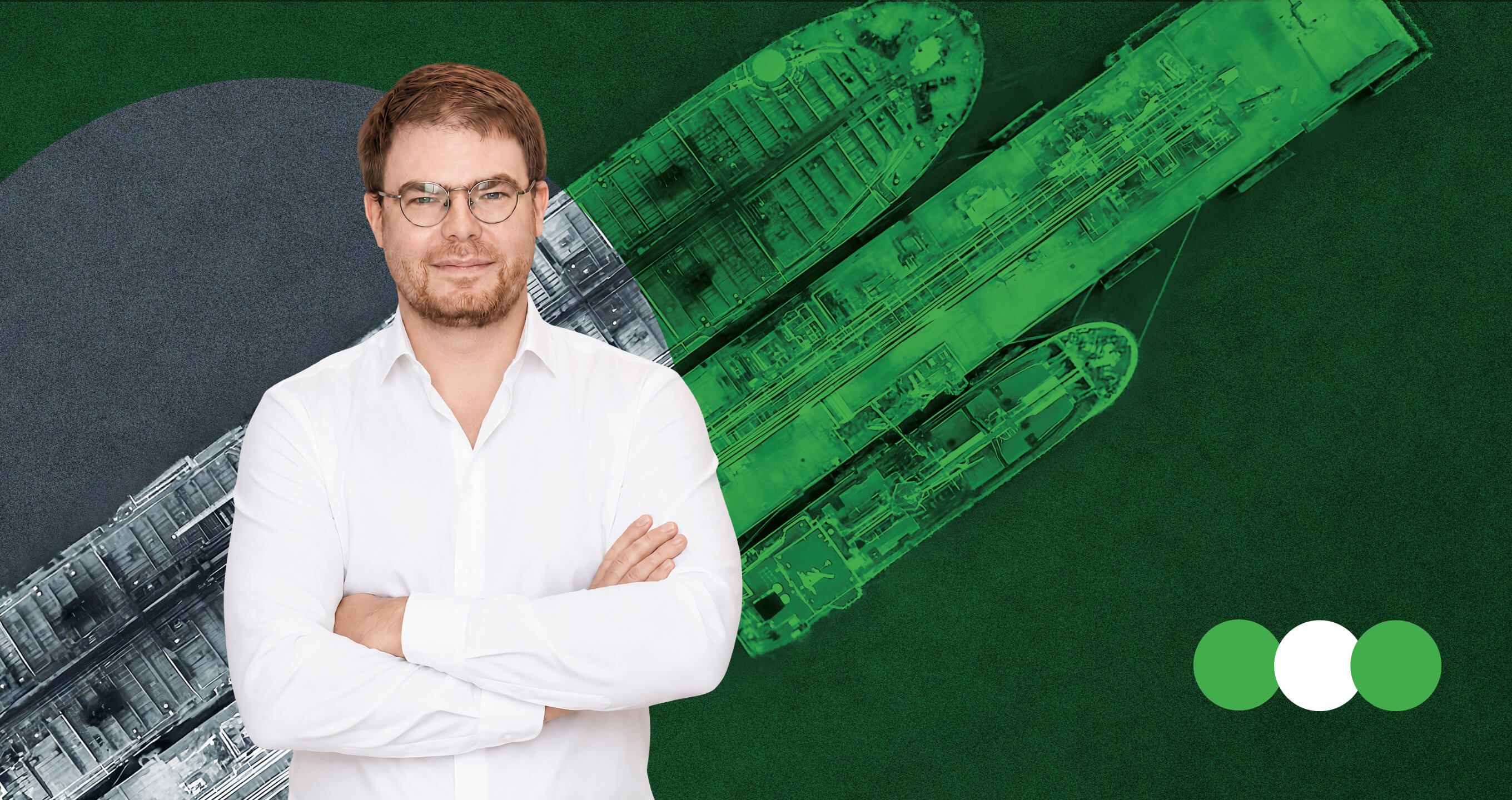

As the fertilizer industry navigates geopolitical uncertainty, shifting trade dynamics, and growing food security concerns, FertiStream CEO Stepan Yashin will join industry leaders at the opening CEO panel, "Leading Through Systemic Disruptions." Ahead of the discussion, we asked him about the challenges and opportunities shaping the future.
The fertilizer industry has experienced several years of disruptions. What makes the current environment different from previous cycles?
The main difference is that volatility is no longer an exception. It has become the operating environment. For most of the 2010s, fertilizer markets operated within a relatively stable cycle of globalization. Trade routes were predictable, logistics were generally available, and the industry was optimized for efficiency. Since 2020, however, we have seen a sequence of major disruptions: COVID-19, the energy crisis, the Russia–Ukraine conflict, export restrictions, tension in the Strait of Hormuz and a more complex regulatory environment. This is visible in market data.
In our analysis, annualized price volatility increased materially after 2020 across all major fertilizer benchmarks. DAP volatility increased from around 13% in 2014–2019 to 23% in 2020–2026. Granular MOP volatility increased from around 8% to 28%. Granular urea volatility increased from around 26% to 45%.
This is consistent with what we see in global trade more broadly. The WTO estimates that world merchandise trade volume will still grow by just 0.5% in 2026. Geopolitics and energy shocks are the primary causes of these low projections, while transport and fuel costs remain structurally elevated. So, the point is not that globalization has stopped. The point is that global trade continues, but it is becoming more volatile, more political, and more expensive to execute.
The conference theme highlights the links between supply chains, energy, and food security. Why should these issues be viewed as one interconnected system?
I think it is because the most important risks are often not the initial shocks themselves, but their second-order effects. An energy shock does not stop at gas prices. It affects ammonia economics, nitrogen production, fertilizer prices, farmer affordability, application rates, and ultimately crop yields. A shipping disruption does not stop at freight rates. It increases delivery time, insurance costs, working capital needs, and the risk that the product will not reach the right market at the right time.
The World Bank’s recent food security update illustrates how quickly strategic trade disruptions can transmit into fertilizer and food markets. Pressure on oil, gas and fertilizer flows through the Strait of Hormuz coincided with an almost 46% month-on-month increase in urea prices and a broader rise in agricultural price indicators. The downstream impact is already visible in vulnerable regions: several countries in Eastern and Southern Africa continue to face double-digit food inflation, food prices are rising faster than overall consumer inflation in 14 percent of the 148 countries where data is available.
This is precisely the second-order effect the industry needs to focus on — a disruption that begins in energy or logistics can quickly become a fertilizer affordability shock, and then a food-price and stability issue. Food security starts long before harvest. It starts with reliable and affordable access to nutrients.
Which factors will shape the fertilizer industry most over the next several years?
I would not separate geopolitics, climate, and farmer economics. The real challenge is that these risks increasingly reinforce each other.
A geopolitical shock can disrupt energy or shipping. Climate volatility can reduce yields and increase import needs. Weak farmer economics can reduce fertilizer application even when the product is physically available. Regulation can then add another layer of complexity to already disrupted flows.
The challenge today is not isolated risk. It is a compounded risk.
How has this changed the way fertilizer companies think about strategy?
Historically, competitive advantage in fertilizers was primarily about production assets, scale, and cost position. Those factors remain critical, but they are no longer sufficient. In the current environment, reliability, resilience, and optionality are becoming equally important.
The industry used to optimize for the lowest-cost supply chain. Today, the lowest-cost chain is not always the safest chain. Companies need diversified logistics, alternative origins, flexible destinations, stronger risk management, more working capital discipline, and faster decision-making.
Has the role of traders changed in this more fragmented environment?
I think fundamentally. Historically, traders acted primarily as optimizers. Their role was to maximize netbacks, exploit arbitrage opportunities, optimize freight, and connect producers with customers more efficiently. Today, the role is increasingly about restoring access and maintaining connectivity.
In our analysis of major fertilizer exporters, which account for approximately 80% of global fertilizer exports, the share of volumes requiring annual reallocation increased from around 13% before 2020 to around 17% after 2020. At the peak in 2021–2022, reallocation reached around 21%. In volume terms, around 34 million tonnes per year required active reallocation in 2021–2025, around 50% above the pre-2020 level. That means much more trading effort is required simply to keep the product moving.
FertiStream operates across multiple markets. How does this global perspective help manage risks?
A global trading platform gives us visibility across regions, products, and flows. We can see imbalances early: where demand is weakening, where logistics are tightening, where affordability is under pressure, constraints are emerging, and product needs to be redirected. And respond accordingly, meeting the highest standards.
What role do technology and AI play in this new environment?
AI will not eliminate volatility. But it can materially improve the speed and quality of response.
The biggest opportunities are in risk detection, logistics optimization, sanctions and compliance screening, inventory positioning, demand forecasting, and weather analytics. This is not a theoretical topic.
For a trading company, the practical value of AI is not abstract. It is decision speed, process discipline and margin protection.
Fertilizer trading remains a highly manual business. A large part of the value chain still depends on traditional processes: documents, contracts, invoicing, payments, logistics updates, compliance checks and credit decisions. In our own estimate, inefficiencies linked to document errors, delayed payments, contract omissions, slow invoicing and delayed decision-making may cost around 25–50 basis points of gross trading margin. In a high-volume, low-margin trading business, that is a very significant value leakage.
So the question is very practical: can AI help us move faster and reduce human error?
Can we identify contract or documentation risks before they create claims? Can we better assess customer and country risk? Can we allocate product more dynamically as markets move? Can we detect disruptions earlier? Can we model alternative routes faster?
For me, this is where AI becomes truly relevant to fertilizer trading. It is not about replacing commercial judgment. It is about giving commercial teams better information, cleaner processes and faster reaction time.
Scale will remain important. But in the next market cycle, speed of adaptation may matter even more
As CEO, how do you balance short-term market challenges with long-term strategic priorities?
In this environment, the short term and the long term are no longer separate. Short-term execution protects reliability today; long-term strategy builds resilience for tomorrow.
For a trading company, this means two things at the same time. On the short-term side, we need daily discipline across freight, credit, working capital, risk and execution. This is how we protect margin and avoid value leakage in volatile markets. At the same time, we must invest in people, digital capabilities, market access, structured finance and stronger regional platforms. These are the capabilities that create strategic resilience.
The objective is not to predict every disruption. That is impossible. The objective is to build an organization that can recognize disruption early, adapt quickly, and continue to serve customers when the market changes.

